
Wildland Firefighter Crew Leader
Emergency Response
A Wildland Firefighter Crew Leader runs a crew on the fire line — directing daily operations, maintaining safety, and making the calls that keep work moving in fast-changing conditions. You're still in it physically, but your job is also to hold the crew together and be the link between what's happening on the ground and what incident command needs to know. It's one of the most demanding leadership roles in any field.

Advanced
Experience Level
Summer
Seasonality
High
Physical Demands
This role suits people who have been on the line and are ready to carry more of it. There's a different kind of intensity to leading — you're still doing the work, but you're also watching everyone else at the same time. When it goes well, when the crew performs and holds the line and everyone comes off safe, there's a real sense of ownership in that. You built that. That's what keeps people in crew leader roles season after season.
A DAY IN THE LIFE
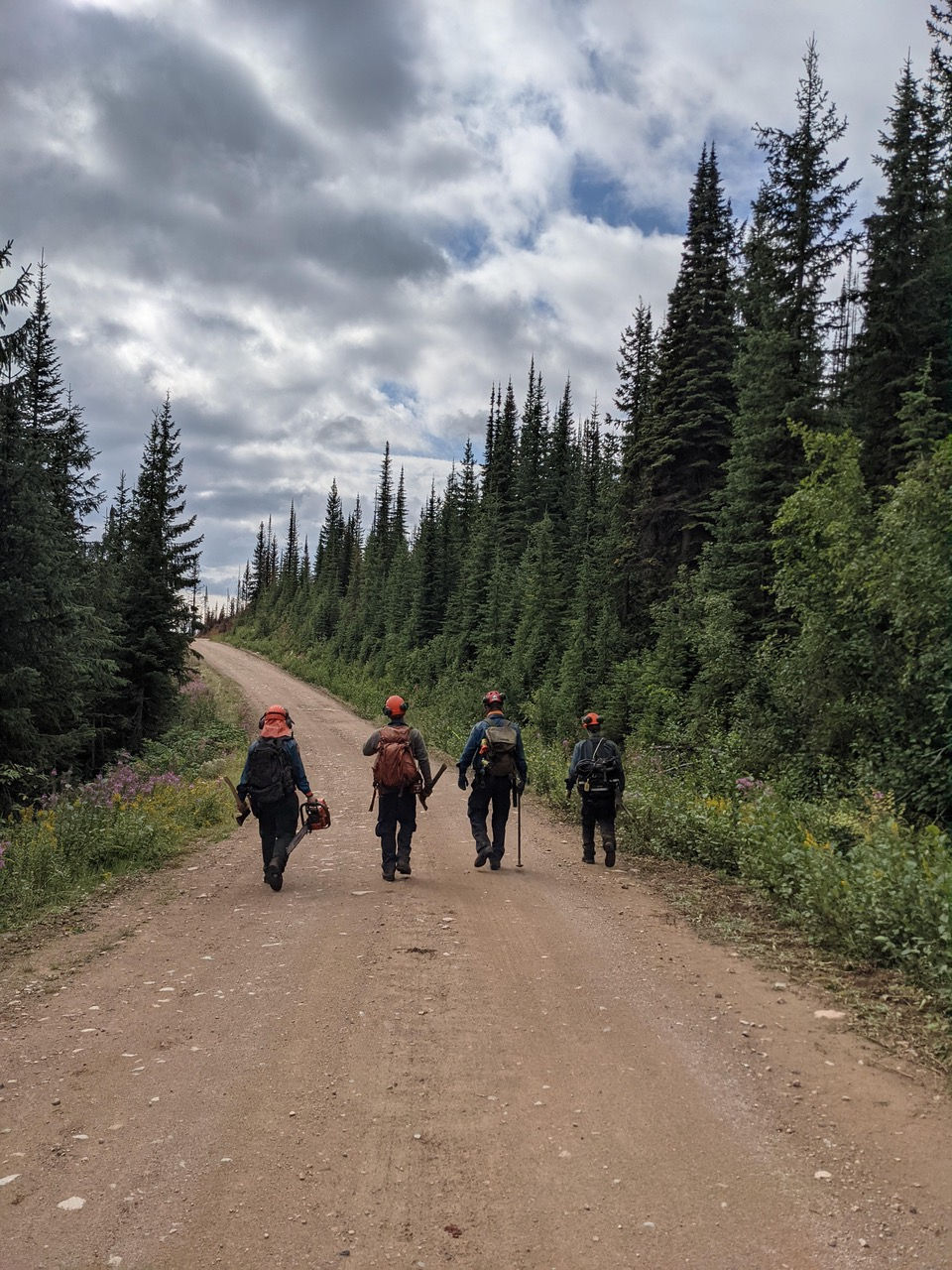
The day starts with a briefing — you're absorbing the plan and then translating it for your crew. Once deployed, you're moving between people: checking in, adjusting, keeping communication tight. You might be working a saw or hose yourself, then stepping back to call something in. The responsibility is constant. At the end of the shift, you debrief, check the crew, and report up the chain. Then you rest and do it again.
WORKING CONDITIONS
You're in the same environment as your crew — heat, smoke, terrain, long shifts — but with the added weight of being responsible for the people around you. Camp life between deployments involves planning, debrief, and keeping the crew ready. Leadership in this environment is earned and very visible.
CYCLICAL NATURE OF ROLE
The role follows BC's fire season cycle, with peak demand from May through September. Crew leaders may be deployed multiple times per season. Off-season activities often include training, planning, and fuels management work. Availability and readiness expectations are high throughout the fire season.
REQUIRED EDUCATION & TRAINING
REQUIRED SOFT SKILLS
Leadership under pressure
Clear and direct communication
Decision-making with incomplete information
Emotional steadiness and crew composure
Accountability for people and outcomes
REQUIRED HARD SKILLS
Significant wildland firefighting experience is required
S-100 / S-185 certifications are required
S-200 or equivalent crew leader certification is typically required
Occupational First Aid (OFA Level 1 or higher) with Transportation Endorsement is required
ICS-200 or equivalent is typically required
WHMIS certification is required
Valid driver's license is typically required
ON THE JOB LEARNING
Field leadership in high-stakes environments
Crew coordination and task management
Real-time fire behavior interpretation
Communication within ICS structures
Decision-making accountability and operational resilience
FUTURE CAREER OPPORTUNITIES
Crew leader experience opens pathways into strike team leadership, incident command positions, prescribed burn coordination, and fire operations management. Some move into training and mentorship roles, safety coordination, or fuels planning. Others advance into senior fire management, environmental restoration leadership, or contracting roles where fire expertise is central.