
Wetland Restoration / Bio Engineering Crew Leader
Recovery
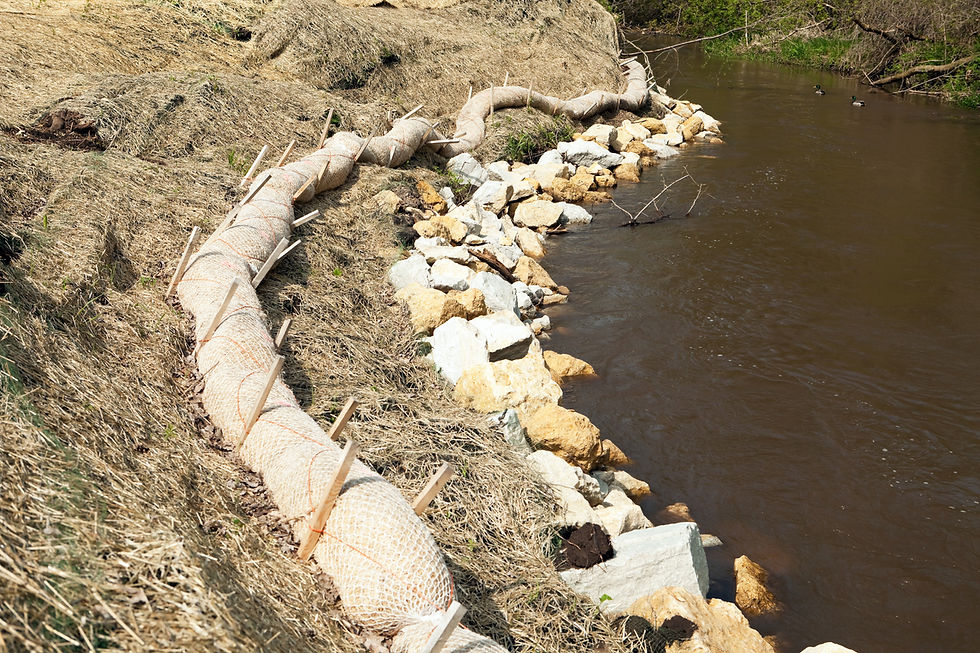
A Wetland and Restoration Bio-Engineering Crew Leader runs a crew doing technically demanding ecological construction work — building structures that stabilize landscapes, restore wetlands, and protect waterways. You're directing the installation work, managing safety in challenging terrain, and being accountable for quality in a field where the stakes are ecological and regulatory. It's a leadership role built for people who know this work from the inside.

Experienced
Experience Level
Spring–Fall
Seasonality
High
Physical Demands
Leading an ecological construction crew suits people who have done the work and understand its complexity. You're managing safety on slopes and near water, maintaining installation quality, and keeping a crew productive through physically demanding conditions. When a structure goes in correctly — when the crib holds and the bank stabilizes — you know your leadership made that happen. It's consequential work with a clear craft dimension.
A DAY IN THE LIFE
You're at the site early, reviewing the plan and thinking through how to deploy the crew safely and effectively across the terrain. From there, it's a day of directing, checking, and adjusting — making sure structures go in correctly, that nobody's taking unnecessary risks on unstable ground, and that the work is moving at a productive pace. Quality and safety don't trade off in this kind of work; both have to be managed simultaneously.
WORKING CONDITIONS
Same challenging terrain as the crew — slopes, wet ground, riparian zones — with the added weight of running everything safely. The technical specificity of bio-engineering installation means the quality bar is high. Leading here builds a specific and respected set of skills in the restoration sector.
CYCLICAL NATURE OF ROLE
Spring through fall aligned with restoration and construction windows. Project timing varies by site conditions, restoration objectives, and contractor.
REQUIRED EDUCATION & TRAINING
REQUIRED SOFT SKILLS
Crew leadership and task management in physically demanding conditions
Safety management near water and on unstable terrain
Clear communication with both crew and project managers
Quality accountability for bio-engineering installation
Problem-solving with materials, terrain, and restoration plan requirements
REQUIRED HARD SKILLS
Strong field experience in bio-engineering, restoration construction, or related work is required
Bio-engineering installation technique training is required
Occupational First Aid (OFA Level 1 or higher) with Transportation Endorsement is required
WHMIS certification is required
Swift Water Awareness training is commonly required for riparian crew leadership
Valid driver's licence is required
ON THE JOB LEARNING
Ecological construction crew leadership and task management
Bio-engineering installation quality oversight
Riparian and slope safety management
Restoration plan interpretation and field adaptation
Multi-hazard site management and professional accountability
FUTURE CAREER OPPORTUNITIES
Crew leadership in bio-engineering and restoration construction opens pathways into restoration project management, environmental construction supervision, and ecological engineering consulting. Skills transfer into stream restoration design, fluvial geomorphology, and natural infrastructure management. Some crew leaders develop into training and technical advisory roles within restoration organizations.